Here is the verdict on Corfu: it is better than you think, bigger than it looks, and almost nobody who visits sees the best of it on their first trip. This guide exists to change that.
The island sits in the Ionian Sea, closer to Italy than to Athens, and it shows. The architecture is Venetian. The food carries 400 years of Italian influence. The landscape is green in a way that shocks visitors expecting the bare, sun-bleached Aegean. Corfu does not look like Greece. It looks like somewhere that has been fought over, shaped and reshaped by a dozen civilisations, and kept the best of all of them.
Most people who come here for the first time end up staying near the coast, following the same recommendations, and leaving with the nagging feeling that they missed something. They did.
The medieval villages in the hills. The beaches that require a hike but pay you back in solitude and water so clear it does not look real. The old town at dawn before the cruise ships arrive. The local food that has nothing to do with tourist-menu Greek salad. These are not secrets exactly. They just require someone who knows the island to point you in the right direction.
That is what this guide is for.
Corfu Old Town (Kerkyra) - A UNESCO World Heritage Site Unlike Any Other in Greece
There is a moment that happens to almost every first-time visitor to Corfu Town. You turn a corner in the Campiello neighbourhood, the oldest quarter, a tangle of steps and washing lines and crumbling plaster the colour of turmeric, and you stop. Because it does not look like Greece. It looks like Venice, or a fever dream of both.
That is not an accident. The Venetians ruled Corfu for nearly 400 years (1386 to 1797), long enough to reshape the island's soul. The narrow streets, the arched passageways, the laundry-draped balconies, all of it is a direct inheritance from the Serenissima. Walk through it slowly. The architecture earns your attention.
What to Do in Corfu Old Town:
1. Walk the Campiello at dawn: Before the cruise-ship day-trippers arrive, the old quarter belongs to locals walking dogs and cafe owners throwing open shutters. The light is gold, the alleys are cool, and you will have the place almost entirely to yourself.
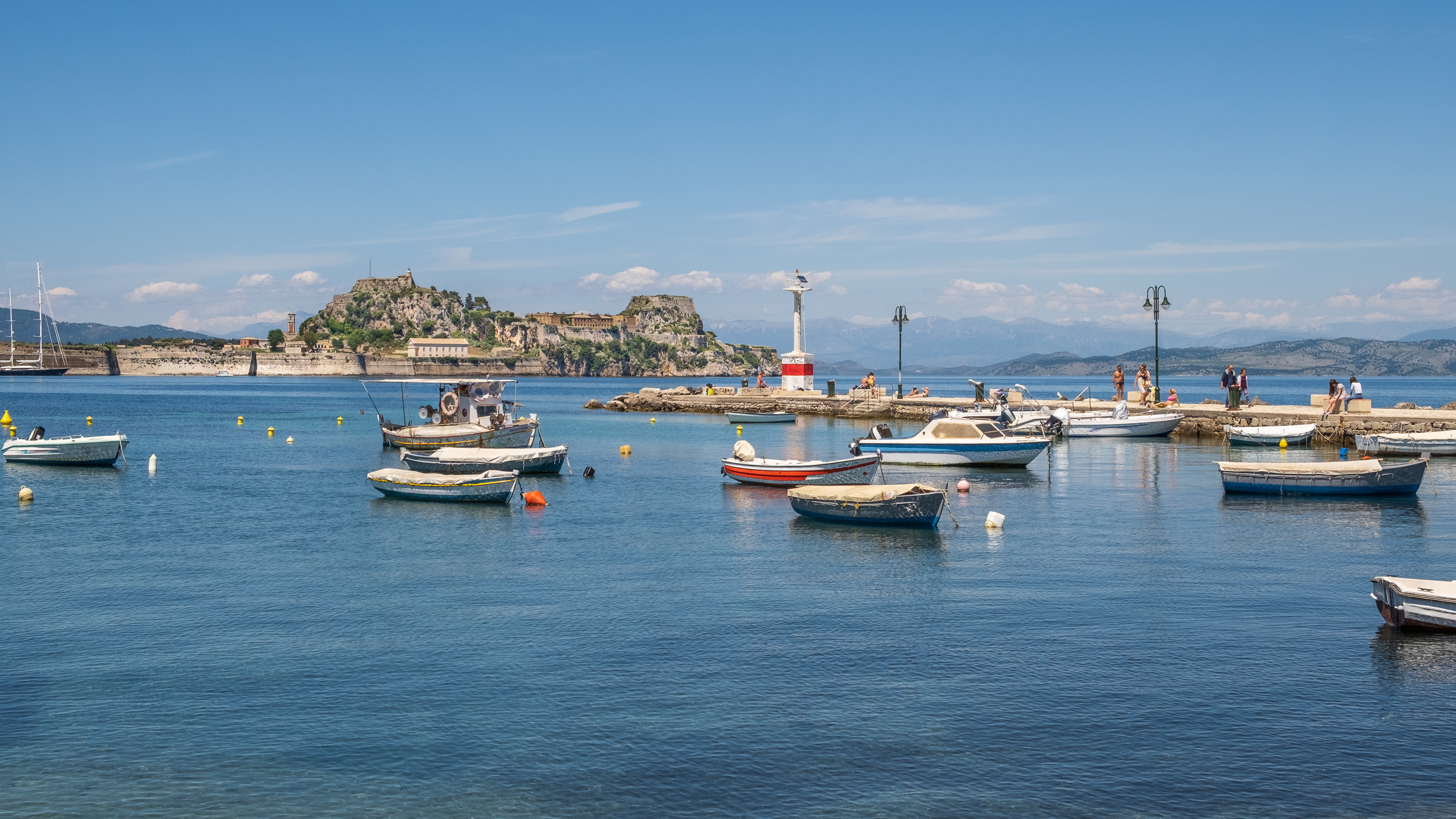
2. Old Fortress (Palaio Frourio): Built by the Byzantines and reinforced by the Venetians on a promontory jutting into the sea, this is one of the most dramatic fortifications in the Ionian. Climb to the lighthouse for a view that encompasses the Albanian mountains across the water. Entry is around 6 euros.
3. Liston Promenade: Modelled on the Rue de Rivoli in Paris by French architects during Napoleon's brief rule of the island (1807 to 1814), the Liston is an arched colonnade of cafes facing the vast Spianada Square, the largest square in Greece. Order a ginger beer, a Corfiot tradition dating back to British rule, and do nothing for an hour.
4. Church of Saint Spyridon: Corfu's patron saint lies in a silver reliquary inside this 16th-century church, and the Corfiots take his protection seriously. Four times a year the island stops entirely for processions in his honour. The church is small, dark, fragrant with candles and incense, and unexpectedly moving.
5. Casa Parlante: This is Corfu Town's best-kept secret. A 19th-century aristocratic house frozen in 1850, complete with life-size wax figures of the family going about their day. The audio-guided tour is theatrical, warm and surprisingly educational. Go.
6. The Museum of Asian Art: Housed in the neoclassical Palace of St. Michael and St. George, this is one of the most important collections of Asian art in Europe, and almost nobody visits it. Over 11,000 objects from China, Japan, India and Persia. Extraordinary and blissfully uncrowded.
Eat Here: Avoid the restaurants facing the Liston, beautiful but overpriced. Head instead into the Campiello alleys to find family-run trattorie serving pastitsada, Corfu's iconic slow-braised beef or cockerel in spiced tomato sauce, served over pasta. It is the island's signature dish and it is nowhere better than here.
Beaches: From Powder-Sand Bays to Cliffside Secrets
Corfu has over 60km of coastline and beaches ranging from vast organised stretches with sunbed empires to wild coves accessible only by boat or a scramble down a goat path. Here is an honest run-through by type:
The Iconic (Worth the Crowds):
- Paleokastritsa: Three interconnected coves on the west coast, backed by cliffs and green hills, with water so clear it looks filtered. The beaches get busy in high summer, but arrive by 9am or after 5pm and it is magical. Boat trips from the jetty take you to sea caves that glow turquoise from inside.
- Glyfada and Agios Gordios: Two of the most beautiful sandy beaches on the island's west coast, large, well-organised, with consistent waves that make them popular with surfers and families alike.
The Effort-Rewarded (Bring Water):
- Porto Timoni: Arguably the most photographed view in Corfu: a narrow isthmus connecting two perfect bays, one facing the open sea, one facing a sheltered cove, with the clearest water you have ever stood in. Getting there requires a 20-minute hike from Afionas village. Carry water, wear shoes with grip. Worth every step.
- Rovinia Beach: A small sandy bay below sheer cliffs on the west coast, reachable only by a steep path or by boat. Often described as the most beautiful beach in Corfu. Arrive early, the shady spots go fast.
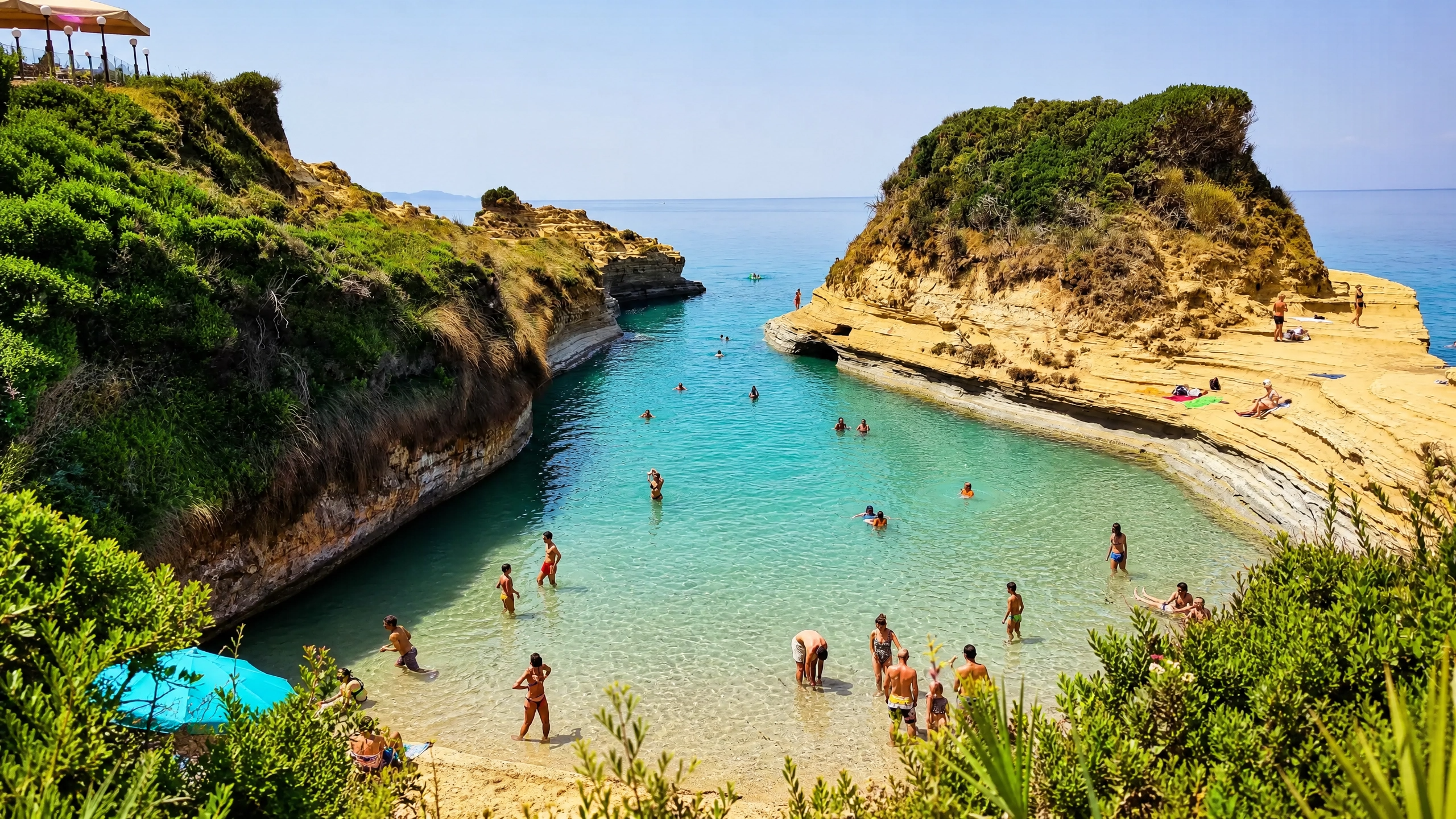
- Canal d'Amour: Near Sidari in the north, a series of sandstone cliffs carved by the sea into channels and coves. Local legend says that couples who swim through the main channel together will marry. The rock formations are genuinely extraordinary.
The Hidden (You're Welcome):
- Mirtiotissa: A small beach below a monastery on the west coast, considered by many, including Gerald Durrell who wrote about it, to be the most beautiful beach on the island. The track down is rough. Park at the top and walk, or take a higher-clearance vehicle from our SUV and 4x4 fleet options.
- Avlaki: A quiet pebble bay in the northeast, popular with local windsurfers and largely ignored by package tourists. Two excellent tavernas right on the beach.
Driver's Tip: The best beaches on Corfu are almost never the ones closest to the main resorts. A car opens up the island's west coast and north, where the roads narrow, the crowds thin and the water turns an almost irrational shade of blue. Not sure which vehicle suits your plans? Check our available cars or get in touch and we will advise you directly.
History, Castles and Culture -- Where Layers of Civilisation Collide
Corfu has been fought over by the Byzantines, Normans, Angevins, Venetians, French, British and finally Greeks. Each left something. Understanding this is the key to reading the island's landscape, because what looks like a pile of rocks is usually the ruin of something extraordinary.
1. Achilleion Palace: Built in 1890 for Empress Elisabeth of Austria (Sisi), one of the most glamorous and tragic figures of the 19th century, and later purchased by Kaiser Wilhelm II of Germany. The gardens are gorgeous, the interiors wildly eclectic, and the statues of Achilles scattered throughout tell you everything about both owners' obsessions. Go for the story as much as the sight.
2. Angelokastro: A Byzantine cliff castle on the northwest tip of the island, perched 1,000 feet above the sea. This fortress was never taken by the Ottomans despite repeated sieges, and the Corfiots consider it a symbol of survival. Little remains except the walls and a small chapel, but the views are staggering. Short but steep hike from the car park.
3. Kassiopi Castle and Village: A medieval Angevin fortress above the pretty harbour village of Kassiopi in the northeast. The castle itself is overgrown and free to wander; the village below is one of the most charming on the island, with a waterfront square, good fish restaurants and a genuine local feel despite the summer tourism.
4. Old Perithia (Paleo Peritheia): The most extraordinary village on the island, and one of the least visited. A medieval settlement on the slopes of Mount Pantokrator, almost entirely abandoned in the 20th century when residents moved to the coast. Today, a handful of families and a few atmospheric tavernas operate among the stone houses. Walking its empty streets is genuinely eerie and deeply beautiful. Do not miss it.
5. Mount Pantokrator: The highest point on Corfu (906m), topped by a 14th-century monastery and a telecommunications mast. On a clear day you can see the Albanian mountains, the Greek mainland, and supposedly the heel of Italy. The cafe at the summit serves strong coffee.
Context Tip: Before visiting Corfu, read or rewatch My Family and Other Animals, Gerald Durrell's memoir of his 1930s childhood on the island. It will make the landscape come alive in a way no guidebook can manage.
Corfu's Villages - Where the Real Island Lives
The real Corfu is not on the coast. It is in the hills, in the villages where olive oil is pressed in November, where the kafeneion (traditional cafe) still serves tsipouro at 10am, and where the church bell marks time more reliably than any clock.
Pelekas: A hill village in the centre of the island with a legendary sunset viewpoint called Kaiser's Throne, named for Wilhelm II, who apparently rode up on horseback every evening to watch the sun go down. The village itself is authentic and unhurried, with a few excellent restaurants.
Lakones: Perched above Paleokastritsa with what might be the best view on the island, the Bella Vista cafe terrace looks directly down onto the famous bays. The village is tiny and quiet. Go for lunch.
The Corfu Trail and Olive Country: The interior of the island is a network of paths through ancient olive groves, some trees are over 1,000 years old. Corfu has approximately 3.5 million olive trees. The Corfu Trail, a 220km long-distance path, runs the length of the island. Even walking a single section through the central olive country is an experience unlike anywhere else in Greece.
Benitses (South Coast): Once notorious as a 1980s package resort, Benitses has been thoroughly gentrified. The old village at its southern end, ancient stone houses, a Byzantine aqueduct, a tiny port, is quietly lovely and almost entirely tourist-free.
What to Eat (and Drink) in Corfu
Corfiot cuisine is its own distinct tradition, shaped by centuries of Venetian influence. It is richer and more aromatic than the rest of Greek cooking, think slow braises, spiced sauces, and an almost Italian relationship with pasta.
1. Pastitsada: Slow-cooked cockerel or beef in a spiced tomato and red wine sauce, served over thick pasta. The island's signature dish. Every grandmother has her own version.
2. Sofrito: Thin veal or beef escalopes fried and then slow-cooked in a white wine, garlic and parsley sauce. Another Venetian inheritance, extraordinary with crusty bread.
3. Bourdeto: A spicy fish stew, traditionally made with scorpionfish, cooked with onions and paprika until the broth turns a deep red. Warming, complex, unlike anything else in Greece.
4. Kumquat: Corfu produces virtually all of Greece's kumquat crop. The tiny citrus fruit is made into liqueur, jam, sweets and chocolate. Buy the liqueur at a proper deli, not the airport.
5. Ginger beer: Not British ginger beer. Corfiot ginger beer is a local tradition dating to British rule (1814 to 1864), made with real ginger and less sweet than commercial versions. Ask for it at any cafe on the Liston.
Where to Drink: Look for local Corfiot wine and the deeply local tsipouro, a grape pomace spirit. The village cafes in Pelekas and Lakones serve both. Do not order Mythos when there is something local available.
Day Trips from Corfu
1. Paxos and Anti-Paxos: The tiny island of Paxos, 45 minutes by ferry south of Corfu, is one of the most beautiful places in the Ionian. Anti-Paxos, even smaller, accessible by local boat, has some of the finest beach water in Greece. Day trips run daily in season.
2. Butrint, Albania: One of the Mediterranean's most atmospheric archaeological sites, just 30 minutes across the strait from Corfu. A UNESCO World Heritage site of overlapping civilisations, Greek, Roman, Byzantine, Venetian, set in a lagoon reserve. Take the ferry from Corfu Town.
3. A Boat Around the Island: The sea caves near Paleokastritsa, the Blue Lagoon near Erikousa, the underwater gardens off Cape Drastis. Corfu's coastline is best experienced from the water. Day-boat hire is available from Paleokastritsa, Gouvia marina and several north-coast resorts.
Practical Corfu: When to Go, How to Get Around, What to Know
Best Time to Visit:
May, June and September are the island's finest months, warm enough to swim, cool enough to explore, and without the August crowds and prices. July and August are peak-season: the island is busy, accommodation prices double, and the most popular beaches can feel overwhelmed. October is deeply underrated. The light is extraordinary, the island quietens, and the olive harvest begins.
Getting Around:
Corfu's bus network (KTEL) covers the main resort strips adequately, but leaves most of the island's best parts unreachable. Taxis are available but expensive for multiple daily trips. A rental car, or a scooter for experienced riders, is simply the best way to see the island properly.
UNO Tip: You can pick up your car directly at Corfu Airport (IATA: CFU) without a credit card, which is unusual in Greece and removes one of the biggest friction points of car hire. Browse our full fleet online, book in advance in summer, and contact us if you need help choosing the right car for your itinerary.
Driving in Corfu:
Corfu drives on the right. The main coastal road is generally fine; the roads into the interior and up to the villages range from narrow to genuinely adventurous. A small city car will get you to 90% of the island. For Mirtiotissa, the track to some north-coast beaches, and any off-road adventures, a higher-clearance vehicle is worth the upgrade. See our SUV options here. Parking in Corfu Town is difficult in summer. Use the Garitsa Bay or Mantouki car parks on the edge of the Old Town and walk in.
A Note on Crowds:
Corfu receives over two million visitors a year. The difference between an over-touristed experience and a genuinely wonderful one is almost entirely about timing and transport. Early mornings, late afternoons, and mid-week visits to popular sites transform them. Having a car means you can leave the crowds behind entirely by driving 20 minutes inland.
Frequently Asked Questions About Best Things to Do in Corfu
How many days do you need in Corfu?
A minimum of 5 days is recommended to do the island justice. Three days gets you the Old Town, one or two beaches and a castle. Five days allows proper exploration, a different region each day, a village or two, a day trip. A week or more and the island starts to feel genuinely known. Corfu is significantly larger than most visitors expect.
Is Corfu worth visiting?
Unequivocally yes. Corfu is unusually diverse for a Greek island: extraordinary architecture, genuinely distinct cuisine, lush green landscapes unlike the Cyclades, water quality that rivals anywhere in the Mediterranean, and enough history to fill a month. The main resorts are not the island. Get past them and Corfu is remarkable.
What is Corfu best known for?
Corfu is best known for its Venetian-influenced Old Town (a UNESCO World Heritage Site), its lush green landscape (unusual in the Aegean), its beaches, particularly Paleokastritsa and Porto Timoni, and its distinct cuisine. It also has a strong cultural pedigree: birthplace of the modern Greek state's first president, Ioannis Kapodistrias, and the childhood home of the Durrell family, memorialised in Gerald Durrell's My Family and Other Animals.
What is the most beautiful part of Corfu?
The northwest coast, the stretch from Paleokastritsa through Angelokastro to Cape Drastis, is where most people have their breath-taken-away moment. The combination of white-grey limestone cliffs, ancient fortresses and impossibly blue water is unlike anywhere else in the Ionian. The Old Town of Corfu, at golden hour, is a close second.
Is Corfu better than Santorini or Mykonos?
For different things, yes. Corfu has significantly more history, better architecture, greener landscapes, and more varied things to do. Santorini has the volcanic drama and the iconic caldera views; Mykonos has the nightlife and the Cycladic aesthetic. For a beach holiday with cultural depth, authentic food, and landscapes you can actually drive through, Corfu wins. For the classic Greek island postcard, white and blue, bare hillsides, windmills, the Cyclades deliver.
Do you need a car in Corfu?
For anything beyond the main resort area: yes. The bus network covers a handful of routes on a schedule that does not always align with what you want to do. Corfu's best beaches, villages, castles and viewpoints are spread across an island that is 60km long and up to 30km wide. Without a car you will see perhaps 20% of what the island has to offer. With one, you see everything. Browse UNO's fleet at Corfu Airport. No credit card required.
Is Corfu expensive?
Relative to the rest of Greece: slightly above average, especially in summer. Accommodation in the Old Town and at the most popular beaches carries a premium. Away from the main resorts, inland villages, the south coast, the northeast, prices drop considerably. Eating at local tavernas rather than tourist-facing restaurants cuts the food bill significantly. A rental car, counterintuitively, often saves money by giving access to cheaper accommodation and restaurants away from resort pricing.
When should you avoid Corfu?
The first two weeks of August are peak of peak season: flights from northern Europe are at maximum, every beach is at capacity, and prices reflect it. The last week of June and the first week of July offer good weather with slightly less pressure. For the best overall experience: early June or late September. Around 28 degrees, calm sea, and the island half-empty.
What language do people speak in Corfu?
Greek is the official language. English is very widely spoken in any tourism-facing context, restaurants, car hire, hotels, most shops. Away from the tourist areas, in the villages and the interior, Greek becomes more dominant but hospitality to visitors is universal. A few words in Greek, efharisto (thank you), kalimera (good morning), parakalo (please and you're welcome), are received with genuine warmth.
Can you visit Corfu as a day trip?
Technically yes. Cruise ships do it constantly. In practice, a single day gives you the Old Town and not much else. You will be sharing the Campiello with several thousand other cruise passengers and leaving just as the light gets beautiful. If there is a choice between one day and two nights, take two nights. The island completely changes when the day-trippers leave.
What are the must-try foods in Corfu?
The three dishes to try before leaving: pastitsada (the slow-braised meat and pasta dish that defines Corfiot cooking), sofrito (veal in white wine and garlic), and bourdeto (spicy fish stew). For something sweet: the kumquat liqueur, unique to Corfu, and a mandolato (honey and nut nougat). For drinks: a Corfiot ginger beer on the Liston, both a tradition and genuinely delicious.



Udostępnij:


Related Articles


Planning this route?
We can help you choose the right car for Corfu
If your itinerary includes villages, beaches or mountain roads, browse the fleet or ask us directly which category fits best.